
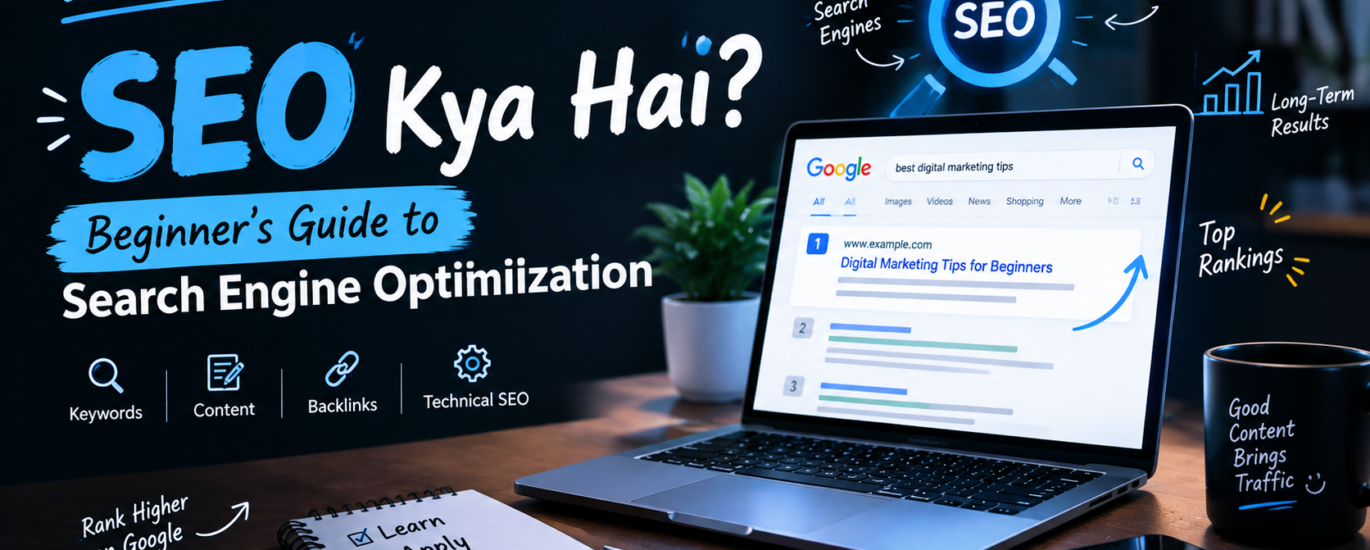
Have you ever searched for something on Google and wondered why some websites appear at the top while others are nowhere to be found? The answer often has a lot to do with SEO, or Search Engine Optimization.
SEO is one of the most important parts of digital marketing. It helps websites become more visible in search engine results and makes it easier for people to discover useful content, products, or services.
If you are new to digital marketing and want to understand SEO in simple terms, this beginner’s guide will help you get started.
What Is SEO?
SEO stands for Search Engine Optimization. It is the process of improving a website and its content so that search engines can better understand it and show it to people searching for related information.
For example, imagine you have a blog about digital marketing and write an article about “digital marketing for beginners.” When someone searches for that topic on Google, you want your article to have a chance of appearing in the search results.
SEO helps you improve that possibility by making your website useful, relevant, understandable, and technically accessible to search engines.
How Does SEO Work?
Search engines such as Google use automated systems to discover and understand pages available on the web. They consider many signals when deciding which pages to show for a particular search.
SEO is not about simply adding the same keyword again and again. Modern SEO is more focused on creating helpful content and providing a good experience for visitors.
A simple way to understand the process is:
Search → Find relevant pages → Understand content → Rank results → Show results
Your goal as an SEO learner is to make your website easy for both users and search engines to understand.
Main Types of SEO
SEO is usually divided into several areas. The three main types beginners should understand are On-Page SEO, Off-Page SEO, and Technical SEO.
1. On-Page SEO
On-page SEO focuses on things you can improve directly on your website.
This includes:
- Using relevant keywords naturally
- Writing useful and original content
- Creating clear headings
- Optimizing page titles and meta descriptions
- Using descriptive URLs
- Adding useful internal links
- Optimizing images and their alt text
For example, if you are writing about SEO basics, your headings and content should clearly explain the topic instead of trying to repeat the word “SEO” unnecessarily.
2. Off-Page SEO
Off-page SEO refers to activities outside your own website that can help build its reputation and visibility.
One well-known part of off-page SEO is link building. When other relevant and trustworthy websites link to your content, those links can contribute to your site’s authority.
However, quality matters. Getting random or low-quality links is not a good long-term SEO strategy.
Building useful content that people naturally want to reference or share is a better approach.
3. Technical SEO
Technical SEO focuses on the technical side of a website.
Some common areas include:
- Website loading speed
- Mobile-friendly design
- Website structure
- Crawlability
- Indexing
- Broken links
- Secure HTTPS connection
- Structured data
You don’t have to become a developer to start learning technical SEO. Understanding the basic concepts is enough in the beginning.
Why Is SEO Important?
SEO can help a website attract people who are already searching for information related to its topic.
Unlike some forms of advertising where you pay to put a message in front of an audience, organic search visibility is based on how well your website satisfies searchers and search engine systems.
Good SEO can help businesses increase website visibility, attract relevant visitors, build online presence, and potentially generate leads or sales.
The results usually take time, though. SEO is generally a long-term process rather than a quick marketing trick.
How Can Beginners Start Learning SEO?
If you’re completely new to SEO, don’t try to learn everything at once.
Start with the fundamentals of keyword research, search intent, on-page optimization, content writing, internal linking, and basic technical SEO.
You can then practice by creating your own website or blog. Choose a topic, research what people are searching for, write a genuinely useful article, optimize it, and monitor how it performs.
Tools such as Google Search Console and Google Analytics can also help you understand how people discover and interact with your website.
Most importantly, keep experimenting and learning. SEO changes over time, so staying curious is an important part of becoming good at it.
Final Thoughts
SEO may seem complicated when you first hear terms like keywords, backlinks, crawling, indexing, and search intent. But once you understand the basics, it becomes much easier to follow.
The core idea is simple: create useful content, make your website easy to understand, and give visitors a good experience.
If you’re learning digital marketing, SEO is definitely a skill worth exploring. Start with small projects, practice regularly, study your results, and improve your website step by step.
