
What Is Digital Marketing? A Beginner’s Guide
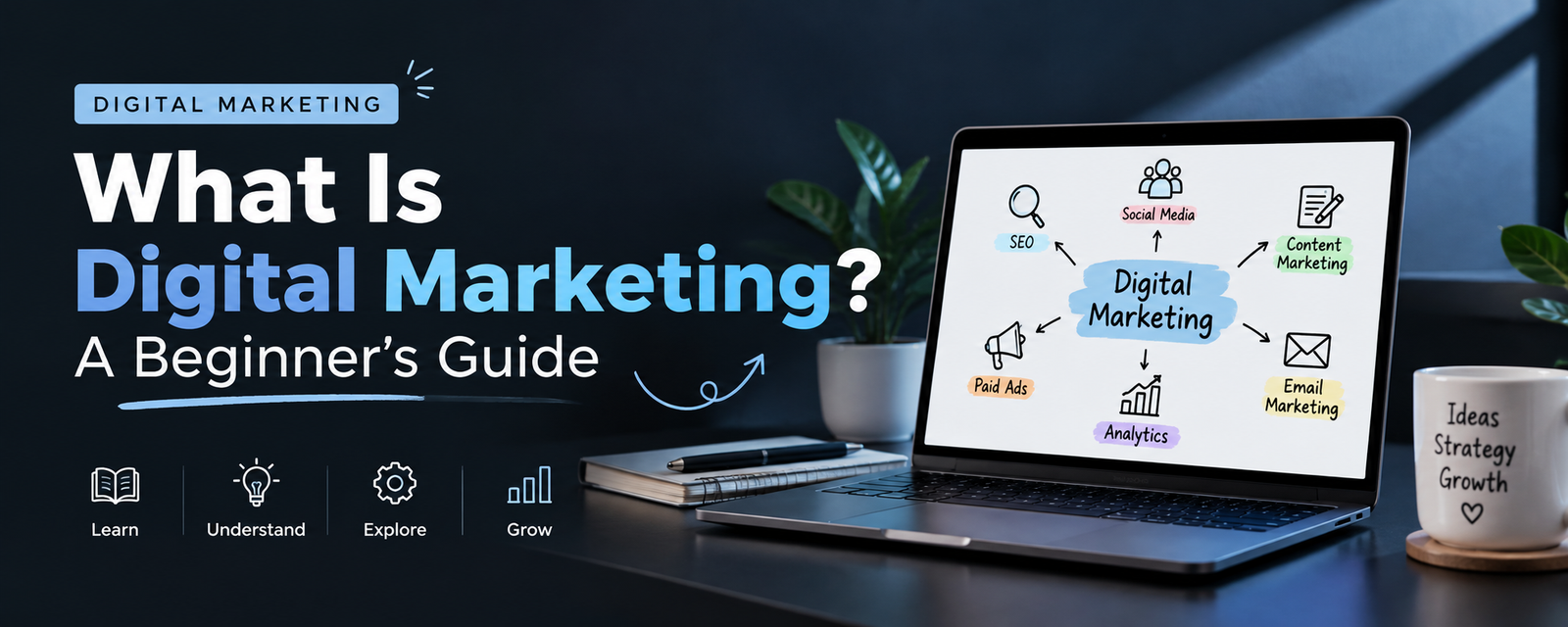
What Is Digital Marketing? A Complete Beginner's Guide for 2026
What is digital marketing? Digital marketing is the process of promoting products, services, and brands through online platforms such as search engines, websites, social media, email, and mobile applications. In today’s digital world, businesses use digital marketing to reach potential customers, increase brand awareness, generate leads, and improve sales. Whether you are a student, business owner, freelancer, or beginner, understanding digital marketing can help you discover new opportunities in the online marketplace.
In this complete beginner’s guide, we will explore how digital marketing works, its different types, major benefits, essential tools, and the steps you can take to start learning digital marketing in 2026.
What Is Digital Marketing and Why Is It Important?
Digital marketing refers to marketing activities carried out using digital technologies and online communication channels. Unlike traditional marketing, which commonly uses newspapers, television, radio, and printed advertisements, digital marketing allows businesses to connect with audiences through websites, search engines, and social media platforms.
For example, when you search for a product on Google, watch a sponsored video on YouTube, or see a business advertisement on Instagram, you are experiencing digital marketing.
Digital marketing is important because customers increasingly use online platforms to research products, compare services, read reviews, and make purchasing decisions.
Why Is Digital Marketing Important for Businesses?
Digital marketing offers several advantages:
Wider audience reach: Businesses can connect with customers across different cities, regions, and countries.
Flexible budgets: Small businesses can begin with affordable marketing activities and expand as they grow.
Measurable performance: Businesses can track website visits, conversions, leads, and campaign results.
Audience targeting: Advertisers can reach people based on relevant interests, locations, and behaviors, subject to platform policies.
Customer engagement: Social media and email allow brands to communicate directly with customers.
These advantages make digital marketing useful for startups, local businesses, established companies, and personal brands.
How Does Digital Marketing Work?
Digital marketing works by connecting a business with its target audience through relevant online channels.
A typical digital marketing process includes five stages.
1. Identify Your Target Audience
The first step is understanding your ideal customers. Businesses research customer needs, interests, online behavior, and purchasing preferences.
For example, a fitness brand might target people interested in exercise, healthy living, and workout equipment.
2. Choose the Right Marketing Channels
Different businesses require different marketing channels. A local restaurant might benefit from Google Business Profile and Instagram, while a software company may focus on SEO, educational content, and email marketing.
3. Create Valuable Content
Businesses create blog articles, videos, social media posts, landing pages, and advertisements to attract potential customers.
Useful content helps answer customer questions and builds trust.
4. Drive Traffic and Generate Leads
Marketing activities encourage people to visit a website, contact a business, subscribe to a newsletter, or purchase a product.
5. Measure and Improve Performance
Digital marketers analyze campaign performance using tools such as Google Analytics and Google Search Console.
They use this information to understand what works and identify opportunities for improvement.
Types of Digital Marketing: What Is Digital Marketing Made Up Of?
Digital marketing includes several strategies that help businesses achieve different marketing objectives.
1. Search Engine Optimization (SEO)
Search Engine Optimization is the process of improving a website’s visibility in unpaid search engine results.
SEO involves keyword research, content optimization, website structure, technical improvements, and earning relevant links.
For example, a bakery can optimize its website for searches such as “custom birthday cakes in Meerut” to attract people looking for nearby services.
SEO is generally a long-term strategy, and results depend on competition, website quality, and other factors.
2. Social Media Marketing (SMM)
Social media marketing involves promoting brands through platforms such as Instagram, Facebook, LinkedIn, and YouTube.
Businesses use social media to share useful content, build communities, communicate with customers, and generate interest in their services.
Popular content formats include Instagram Reels, carousel posts, short videos, educational graphics, and customer testimonials.
3. Pay-Per-Click Advertising (PPC)
PPC is an online advertising model in which advertisers pay when someone clicks their advertisement.
Google Ads is a widely used platform for search advertising, while Meta Ads supports advertising across Facebook and Instagram using several campaign objectives and pricing models.
Paid advertising can help businesses reach relevant audiences more quickly, but profitability depends on targeting, creative quality, competition, and campaign optimization.
4. Content Marketing
Content marketing focuses on creating valuable and relevant content to attract and retain an audience.
Examples include:
-
Educational blog articles
-
YouTube tutorials
-
Downloadable guides
-
Infographics
-
Case studies
-
Informative social media posts
A digital marketing agency might publish an SEO checklist to help small business owners understand website optimization.
5. Email Marketing
Email marketing allows businesses to communicate with people who have agreed to receive relevant messages.
Companies use email campaigns to share newsletters, product updates, promotional offers, and useful resources.
Effective email marketing requires audience segmentation, relevant messaging, and respect for privacy and unsubscribe preferences.
6. Affiliate Marketing
Affiliate marketing is a performance-based marketing method in which individuals or businesses earn commissions by referring customers to products or services.
For example, a technology blogger might recommend software through a tracked affiliate link and receive a commission when an eligible purchase occurs.
Benefits of Digital Marketing for Small Businesses
Digital marketing can help small businesses compete for customer attention without requiring the advertising budgets of large companies.
Cost-Effective Marketing Opportunities
Businesses can use organic social media content, SEO, and helpful blog articles to build visibility. These activities still require time, skills, and resources, even when there is no direct advertising cost.
Better Audience Understanding
Analytics tools provide information about traffic sources, website engagement, and conversions.
Businesses can use these insights to improve content and marketing campaigns.
Improved Customer Relationships
Social media comments, direct messages, customer reviews, and email communication help businesses understand customer questions and respond to feedback.
Lead Generation and Business Growth
An optimized website, useful content, and relevant advertising can encourage potential customers to submit inquiries or request services.
However, digital marketing does not guarantee leads or sales. Results depend on the offer, market demand, execution, and customer experience.
Traditional Marketing vs Digital Marketing
Traditional and digital marketing both help businesses communicate with potential customers, but they use different channels and measurement methods.
| Feature | Traditional Marketing | Digital Marketing |
|---|---|---|
| Channels | TV, radio, newspapers, print | Search engines, websites, social media |
| Audience | Often broad or location-based | Can be highly targeted |
| Performance Tracking | Often indirect | Detailed digital metrics |
| Communication | Frequently one-way | Supports two-way interaction |
| Campaign Changes | May require more time | Often adjustable quickly |
| Budget | Varies by media and reach | Flexible across many channels |
The right approach depends on business goals, audience behavior, available resources, and marketing budget.
Many businesses benefit from combining traditional and digital marketing rather than relying exclusively on one method.
Essential Digital Marketing Skills for Beginners
Learning digital marketing requires a combination of creative, analytical, and technical skills.
Keyword Research and SEO
Beginners should understand search intent, keyword selection, website optimization, and basic technical SEO.
Content Writing and Copywriting
Good writing helps marketers create informative articles, compelling advertisements, useful landing pages, and engaging social media captions.
Social Media Management
Understanding content planning, audience engagement, publishing schedules, and platform analytics is valuable for social media marketing roles.
Marketing Analytics
Digital marketers should learn how to interpret website traffic, engagement, conversions, and campaign performance.
Basic Website Management
Knowledge of WordPress, website structure, landing pages, and mobile-friendly design can help marketers implement their strategies.
Best Digital Marketing Tools for Beginners
Several tools can help beginners practice digital marketing.
Google Search Console: Monitor a website’s presence in Google Search, review indexing information, and identify search performance trends.
Google Analytics: Understand website traffic, visitor engagement, and important website events.
Google Trends: Explore changes in search interest across topics, locations, and time periods.
Google Keyword Planner: Research keyword ideas and advertising-related search estimates.
Canva: Create social media graphics, presentations, banners, and other marketing materials.
Yoast SEO: Improve WordPress content structure and review basic on-page SEO elements.
Meta Business Suite: Manage Facebook and Instagram content, messages, and selected performance insights.
Beginners do not need to master every tool immediately. Start with tools relevant to your current learning goals.
How to Start Learning Digital Marketing in 2026
If you are new to digital marketing, a structured learning approach can make the process easier.
Step 1: Understand the Fundamentals
Start by learning SEO, social media marketing, content marketing, paid advertising, and marketing analytics.
Focus on understanding how each channel supports business objectives.
Step 2: Build Your Own Website
Creating a WordPress website is an excellent practical learning project.
You can practice publishing blog articles, optimizing pages, improving website navigation, and monitoring search performance.
Step 3: Practice SEO
Choose a relevant topic, research keywords, write useful content, and optimize your title, headings, URL, and internal links.
Use Google Search Console to observe how your pages perform over time.
Step 4: Create a Portfolio
A digital marketing portfolio can showcase your skills, projects, blog articles, and practical experience.
Include screenshots, explain your process, and describe the results you can genuinely verify.
Step 5: Explore Jobs and Freelancing
After developing foundational skills, explore entry-level opportunities such as SEO Intern, Digital Marketing Executive, Content Marketing Intern, or Social Media Executive.
You can also build freelancing experience through manageable projects that match your abilities.
Frequently Asked Questions About Digital Marketing
What Is Digital Marketing in Simple Words?
Digital marketing means promoting products, services, or businesses using online channels such as Google, websites, social media, and email.
Is Digital Marketing Good for Beginners?
Yes. Beginners can start with free educational resources and practice using their own websites or social media projects. Professional growth requires consistent learning and practical experience.
Can I Learn Digital Marketing Without Coding?
Yes. Most entry-level digital marketing activities do not require programming. However, basic HTML, website management, and technical knowledge can be helpful.
What Is the Difference Between SEO and Digital Marketing?
Digital marketing is the broader field of online marketing. SEO is one part of digital marketing that focuses on improving visibility in unpaid search results.
How Long Does It Take to Learn Digital Marketing?
The timeline depends on your background, practice time, and learning goals. Beginners can understand the fundamentals within a few months, while developing professional expertise usually requires sustained practical experience.
Conclusion
Digital marketing has become an important part of how businesses attract customers, communicate with audiences, and build their online presence.
Understanding what is digital marketing, its different channels, essential skills, and practical applications is a useful first step for anyone interested in this field.
From SEO and content marketing to social media and paid advertising, each strategy serves a different purpose. The most effective approach is to understand business objectives, choose appropriate channels, and measure performance.
If you are beginning your digital marketing journey, focus on learning the fundamentals, practicing consistently, and building real projects.
Explore more beginner-friendly digital marketing guides, SEO tutorials, and practical learning resources on DigitalbyMausam.